
The BEAR® Implant serves as a bridge to restore the patient’s native ACL, enabling the knee joint to function more naturally
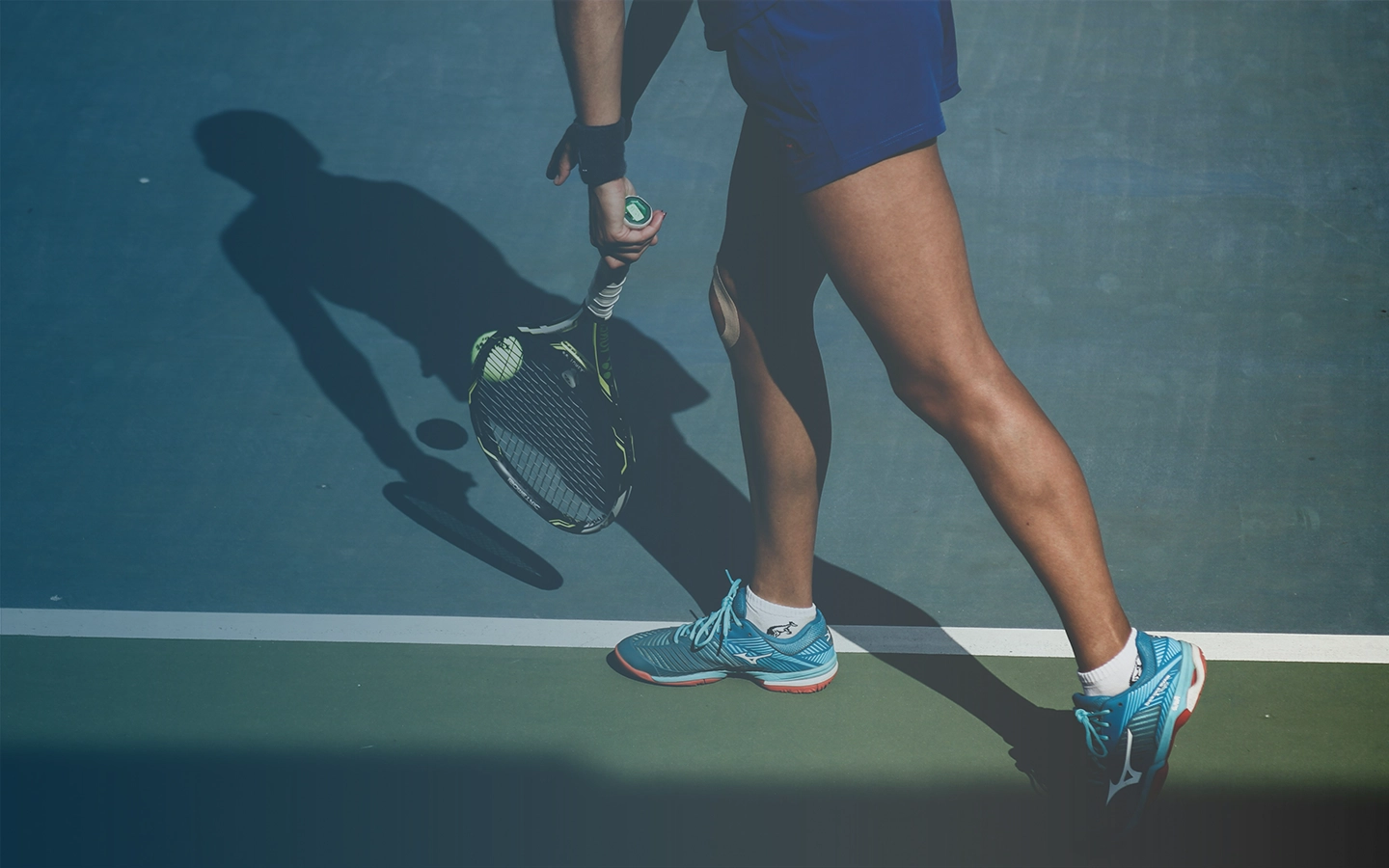
Preserves knee anatomy and landmarks
No grafts or donor tissue required
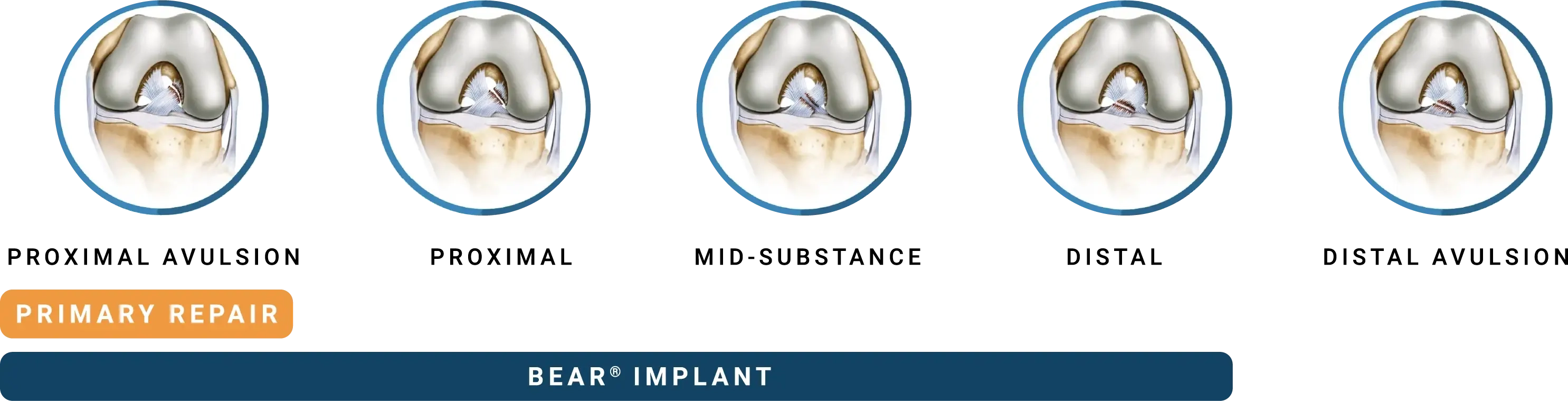
Clinically proven efficacy across a broad range of tear types
Validated by Level 1 clinical evidence

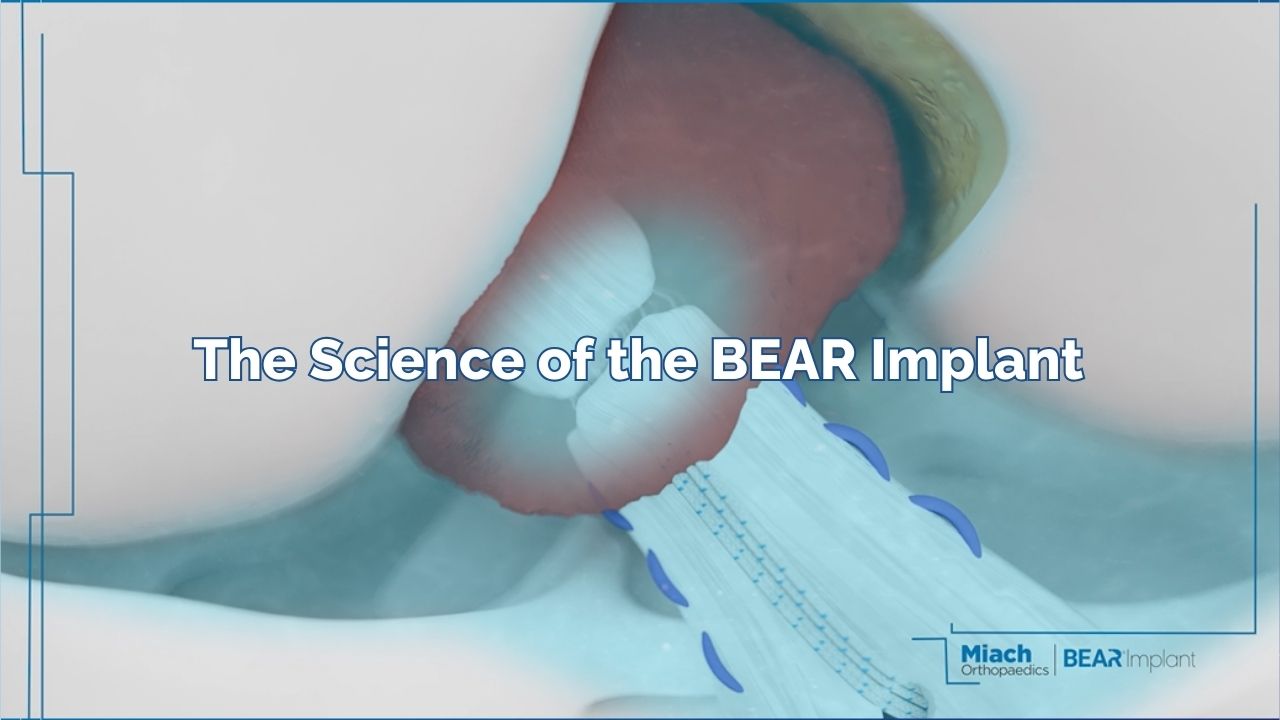

Autologous whole blood is combined with the BEAR Implant to form a clot that shields the two torn ends of the ACL from the harsh synovial fluid, creating a protective environment conducive to healing.


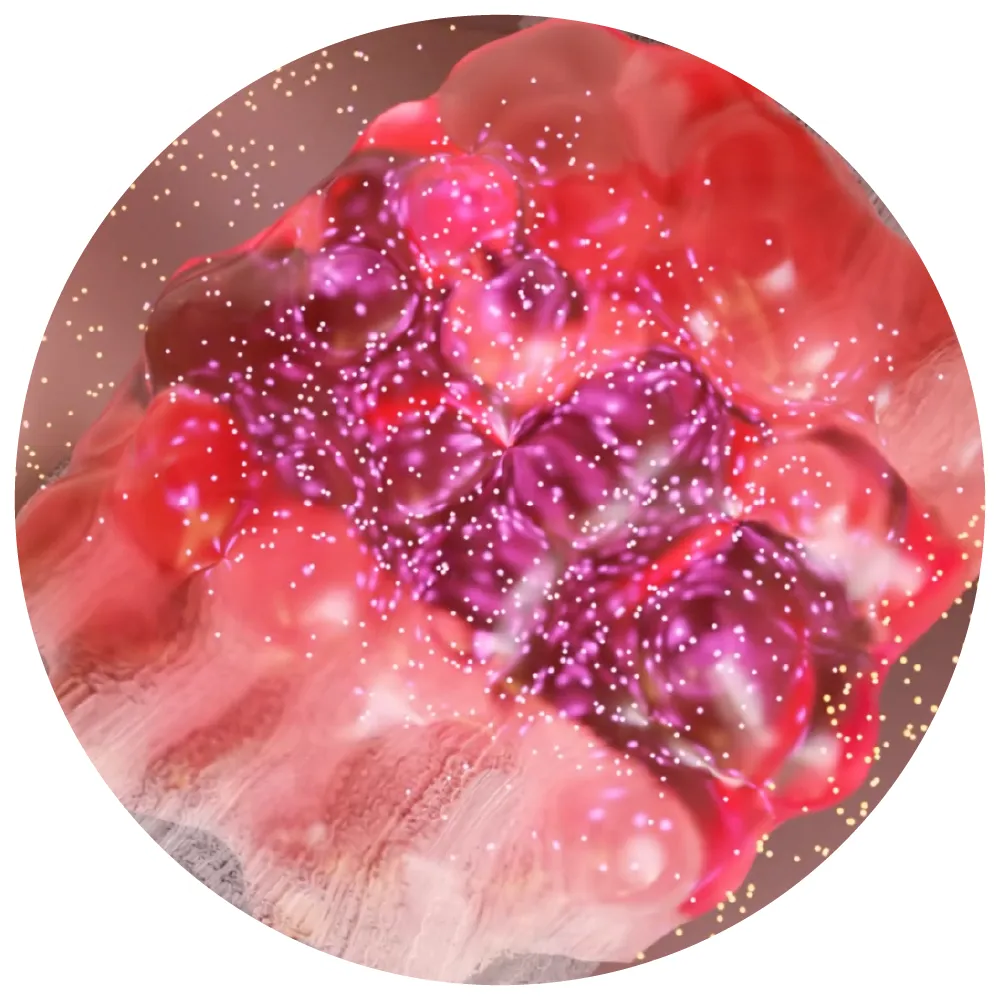
The BEAR Implant facilitates the body's own natural healing response by supporting cell migration and proliferation.
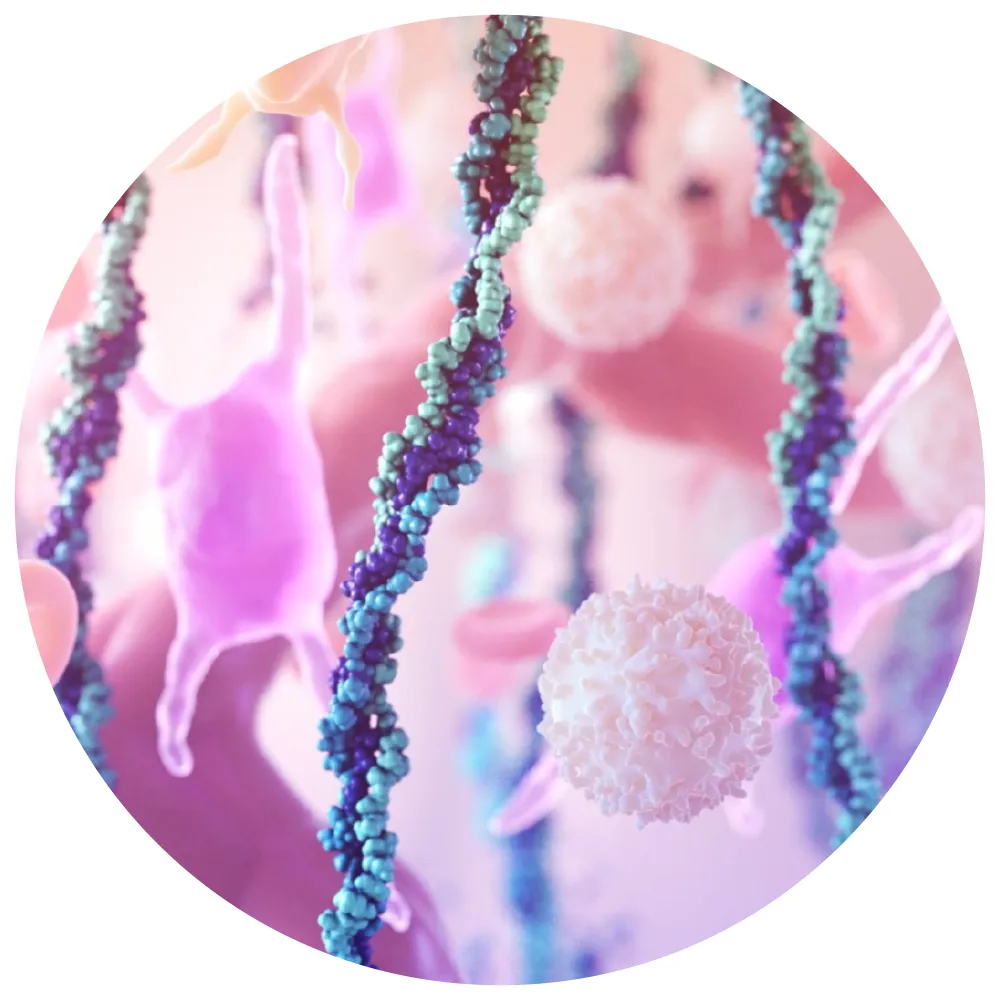
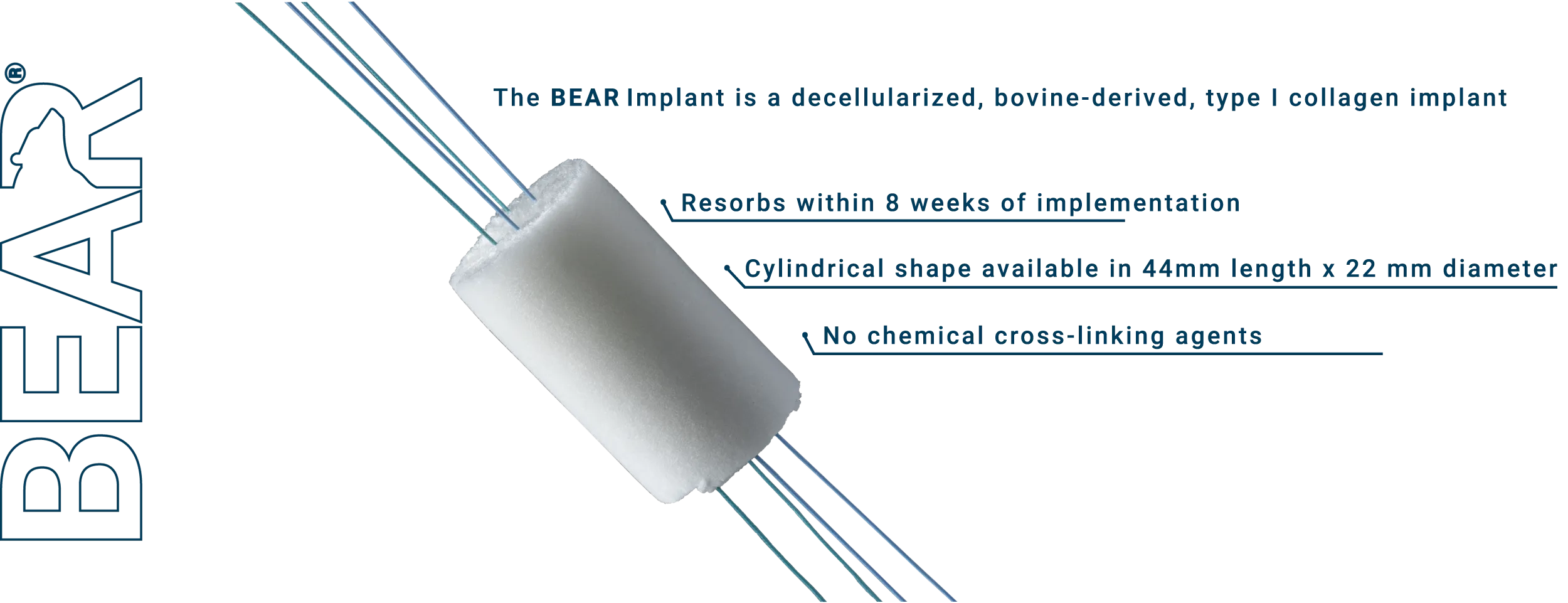
Within eight weeks, the BEAR Implant is resorbed and replaced with native cells, collagen and blood vessels. The new tissue continues to remodel and strengthen over time.
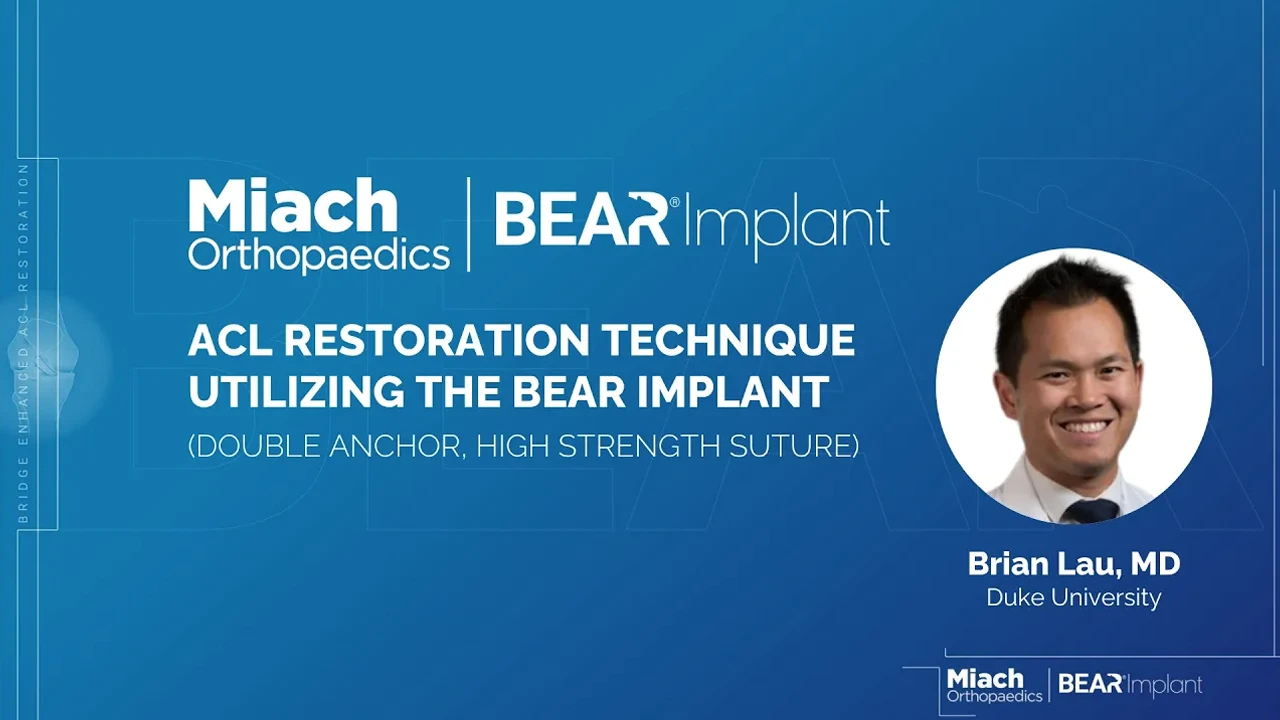
Dr. Brian Lau, a sports medicine orthopaedic surgeon based in Durham, NC, presents his preferred BEAR Implant surgical technique utilizing anchors for fixation, high strength suture, and luggage tag stitches on the tibial stump.
Watch Video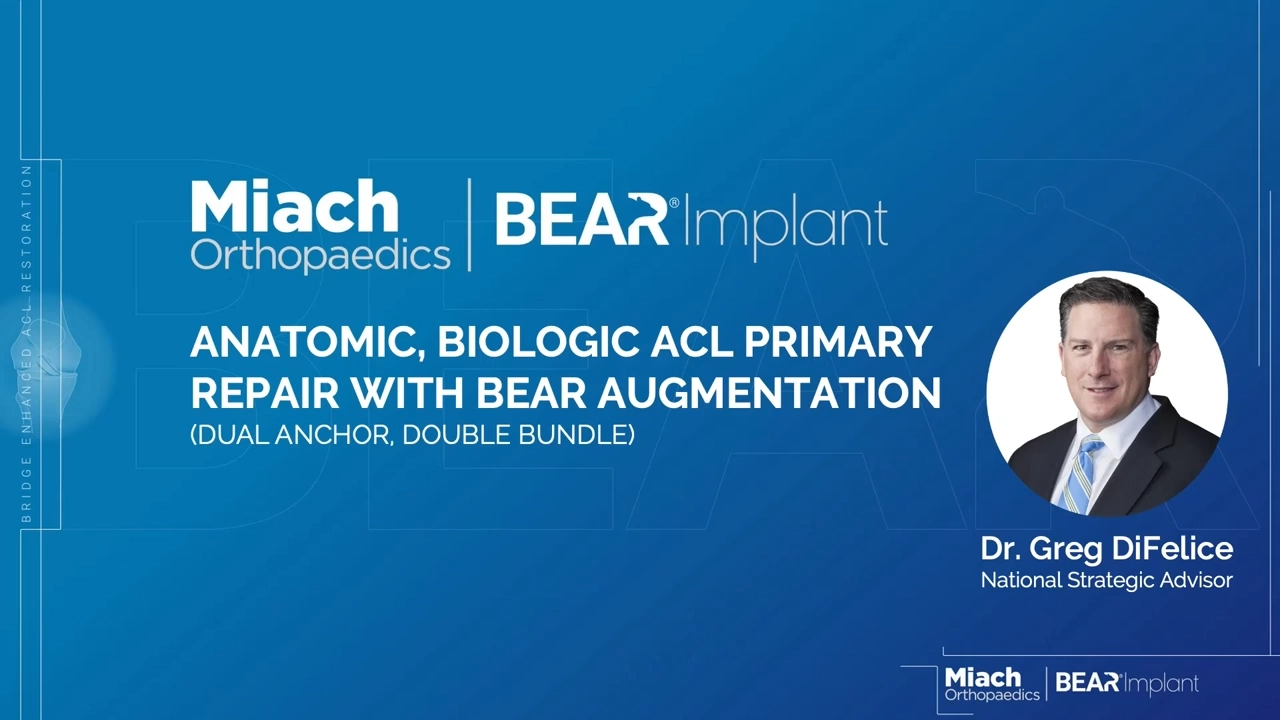
Dr. Gregory DiFelice, National Strategic Advisor to Miach Orthopaedics, demonstrates the dual anchor double bundle BEAR Implant surgical technique.
Watch Video
Dr. Sean Keyes out of Orlando, FL demonstrates the original BEAR procedure technique pioneered by Dr. Martha Murray, placing one button on the distal femur and the other on the proximal tibia.
Watch Video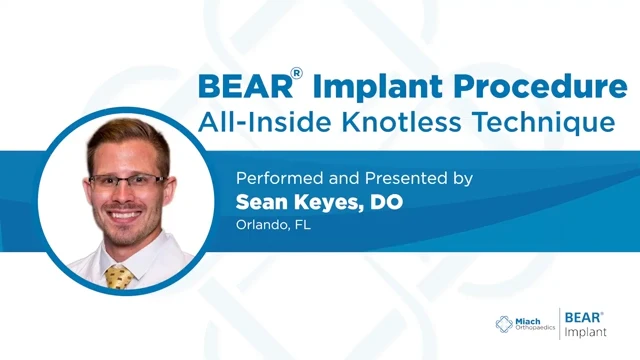
Dr. Keyes performs an all inside knotless approach utilizing two suture anchors to secure the BEAR Implant over the torn ends of the ACL.
Watch Video
Dr. Keyes demonstrates a hybrid BEAR Implant technique, utilizing a button on the femur and knotless anchor on the tibia.
Watch Video
Developed for skeletally immature BEAR Implant patients, Dr. Keyes performs a hybrid technique placing a button on the tibia and a knotless anchor on the femur.
Watch Video
Patients may be eligible for the BEAR Implant if they have a partial or complete ACL tear as confirmed by MRI. While patients in our early clinical studies were required to have surgery within 50 days of ACL injury, real world experience has shown ACL tissue quality, not time, determines eligibility for the BEAR Implant.
To read BEAR Implant Instructions for Use:
Click Here